
Sunless tanning vs. traditional tanning: safer, stunning results
- Sun Studio Tan
- Mar 29
- 7 min read

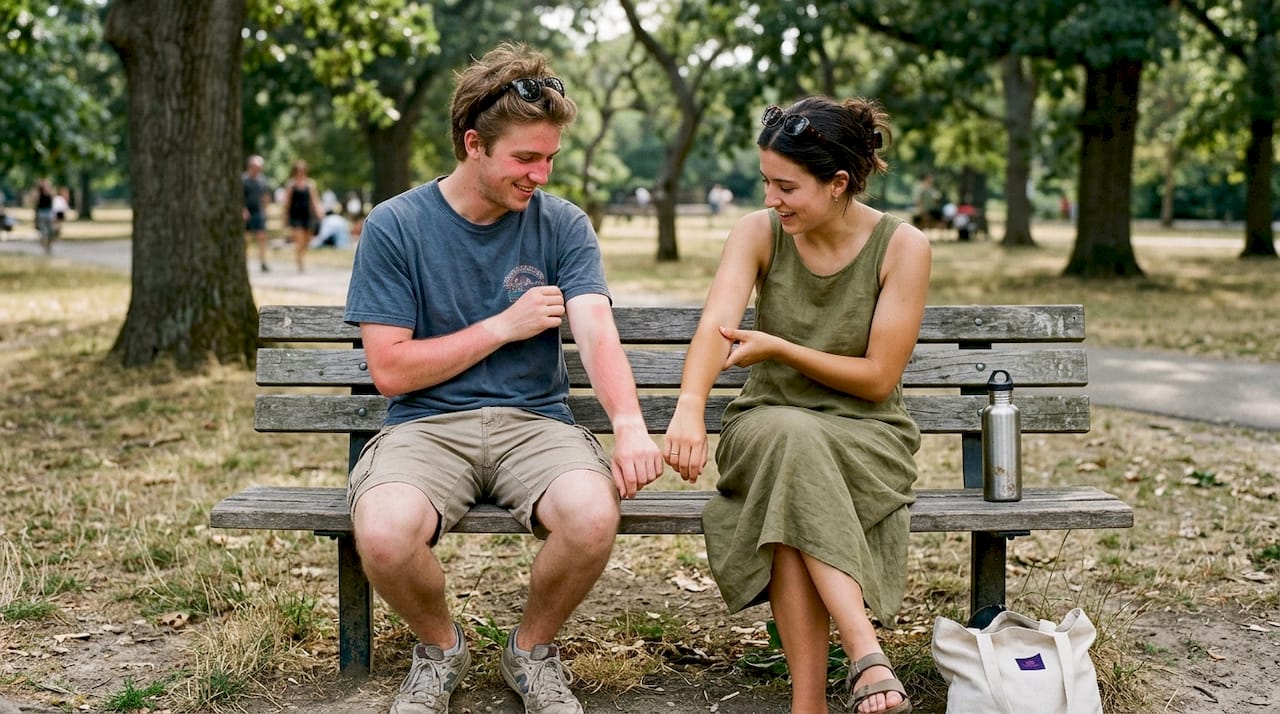
That golden glow has long been seen as a sign of health, vitality, and beauty. But what if the method you use to get there matters far more than the color itself? For anyone in Columbus preparing for a wedding, a festival, or a night out in the Short North, the choice between sunless and traditional tanning is not just about aesthetics. It is about protecting your skin for the long haul while still looking absolutely radiant for every special moment.
Table of Contents
Key Takeaways
Point | Details |
UV tanning health risks | Traditional tanning dramatically increases skin cancer risk and causes premature aging. |
Sunless tan safety | Sunless tanning offers beautiful results without UV exposure or cancer risk. |
Customization and prep | Professional sunless tans are customizable, and prepping your skin boosts their look and longevity. |
SPF still required | A sunless tan does not replace sunscreen—always protect your skin outdoors. |
Expert recommendations | Dermatologists agree: Sunless tanning is the healthiest choice for any occasion. |
How traditional tanning works
Traditional tanning relies on ultraviolet radiation, specifically UVA and UVB rays, to trigger your skin’s melanocytes (the cells responsible for pigment) to produce more melanin. That extra melanin is what creates the darker color you see after a day in the sun or a session in a tanning bed. It sounds simple enough, but the process comes with serious consequences.
The safety risks of UV tanning are well documented. UV exposure causes direct DNA damage to skin cells, accelerates collagen breakdown, and leads to premature aging including wrinkles, sunspots, and loss of elasticity. Every tan from UV radiation is, at its core, a sign of skin injury.
The statistics are striking. Indoor tanning raises melanoma risk by 75% when started before age 35, and also increases squamous cell carcinoma risk by 58% and basal cell carcinoma risk by 25%. More than one million skin cancer cases in the US each year are linked to UV exposure.
“There is no such thing as a safe tan from UV radiation. Any color change in your skin from UV exposure is a sign of damage.” — HealthPartners Medical Team
The “healthy glow” from UV tanning is, in reality, your skin’s distress signal. That is a hard truth worth sitting with before your next big event.
The science of sunless tanning
Once you understand the risks with UV tanning, it is essential to see how sunless tanning offers a fundamentally different approach. Instead of triggering biological damage, sunless tanning works through chemistry on the skin’s surface.
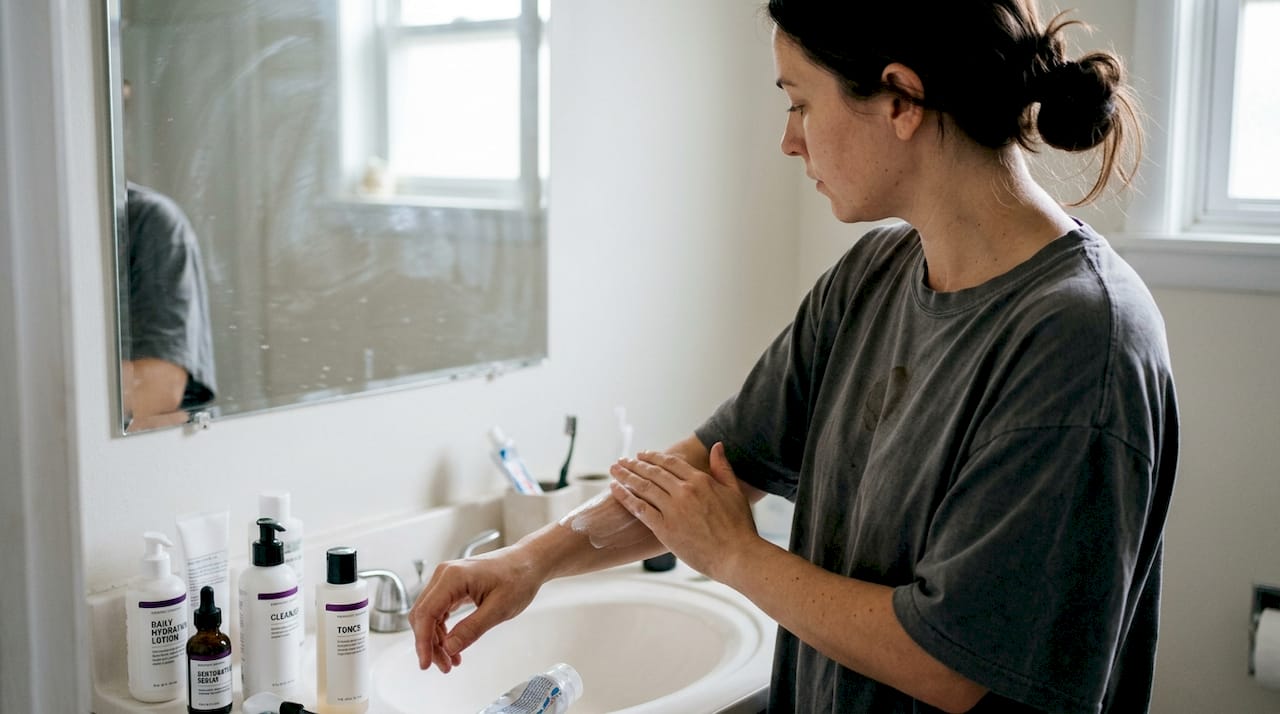
The active ingredient in virtually all sunless tanners is DHA, short for dihydroxyacetone. DHA is a simple sugar derived from plant sources like sugar beets. When applied to skin, it reacts with amino acids in the stratum corneum (the outermost, dead layer of skin) through a process called the Maillard reaction. This reaction produces brown pigment compounds called melanoidins, which mimic melanin color without any UV exposure whatsoever.
Because the color develops only in dead skin cells, there is zero DNA damage involved. Your living skin tissue is never touched by the process. That is a fundamentally safer outcome.
Feature | UV tanning | Sunless tanning |
Color mechanism | Melanin stimulation via UV | DHA reaction with amino acids |
DNA damage | Yes | No |
Cancer risk | Significant | None from the tan itself |
Skin aging | Accelerated | Not accelerated |
Customization | Limited | High |
Event readiness | Unpredictable | Controlled and precise |
Professional airbrush spray tanning takes this science even further. A skilled technician can blend solutions to match your exact skin tone, apply color evenly across every contour, and deliver a streak-free, natural-looking result that no at-home kit can replicate. Our customized tanning services are designed specifically for this level of precision.
Pro Tip: Exfoliate thoroughly 24 hours before your spray tan appointment. Removing dead skin buildup creates a smooth, even canvas so the DHA reacts uniformly and your color lasts longer.
Sunless tanning vs. traditional tanning: Key differences at a glance
Now that you know how each method works, let’s put the facts side by side so you can decide what is best for your next event or everyday glow.
Criteria | UV tanning | Sunless tanning |
Health risk | High (cancer, aging) | Very low |
Color quality | Variable, uneven | Customizable, even |
Duration | Fades over weeks | 5 to 10 days |
Dermatologist approval | Not recommended | Recommended |
Prep required | Minimal | Exfoliation, moisturizing |
UV protection added | Minimal (SPF 2 to 4) | None |
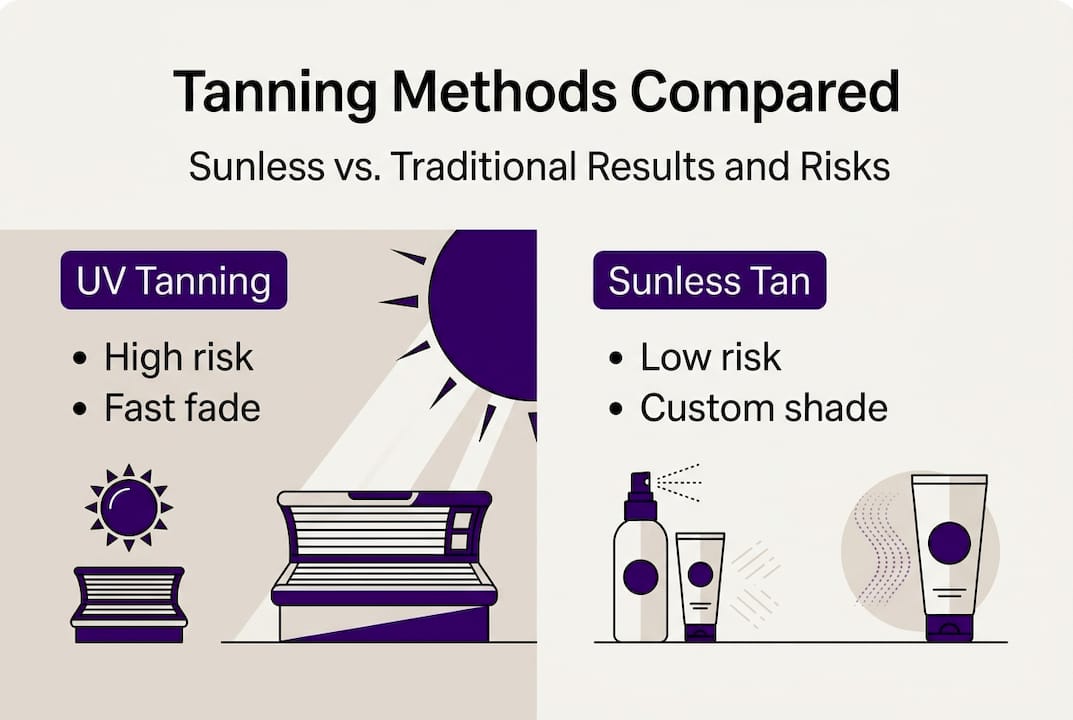
Dermatologists consistently recommend sunless tanning over UV methods for health-conscious individuals. Their position is clear: there is no safe level of UV tanning. The color you get from UV exposure always comes at a biological cost.
Here is what sunless tanning wins on across the board:
No cancer risk from the tanning process itself
No premature aging caused by the application
Fully customizable color depth and tone
Predictable results timed perfectly for your event
Comfortable experience with professional application
For anyone preparing for a wedding, a photoshoot, or a Columbus festival, the ability to control exactly how you look and when your color peaks is a genuine advantage. You can explore our tanning safety FAQs for more detail on what to expect.
Risks, limitations, and expert recommendations
While the big risks are with UV tanning, it is important to understand the full safety profile of sunless options too. No beauty treatment is entirely without nuance.
Sunless tanners are significantly safer overall, but there are a few things worth knowing. DHA is not FDA-approved for inhalation during spray tan application, which is why professional studios use protective measures like nose filters and lip balm barriers. Contact dermatitis appears in roughly 1.96% of reviews, and some individuals with very sensitive skin may experience mild irritation.
There is also an important edge case: if you go into UV sun exposure immediately after a spray tan, DHA can interact with UV rays to generate free radicals. This is another reason why sunscreen remains essential even after a sunless tan. A review on sunless tanning also notes that DHA can temporarily alter the appearance of pigmented lesions, which is worth discussing with your dermatologist if you have existing skin concerns.
“Sunless tanners do not provide meaningful UV protection. Always apply a broad-spectrum SPF 30 or higher when spending time outdoors, regardless of your tan.” — Dermatology expert consensus
Here are the top expert tips for the safest, most beautiful sunless results:
Exfoliate 24 hours before your appointment to remove uneven dead skin.
Avoid moisturizer on the day of your tan, as it can create a barrier that blocks DHA absorption.
Wear loose, dark clothing after your session to avoid transfer while the color develops.
Apply sunscreen daily after your tan, especially outdoors in Columbus summers.
Avoid prolonged water exposure in the first 8 hours to let the color fully develop.
For those interested in supporting their skin health beyond tanning, our tanning wellness options pair beautifully with a sunless routine.
Making the best choice for your skin and event
Now that you know the facts, here is how to put it all into practice for a safe, glowing look at your next big event.
A professional sunless tan lasts 5 to 10 days and fades naturally as your skin exfoliates. That means you can time your appointment strategically. Book 24 to 48 hours before your event for peak color. The result is a rich, even glow that photographs beautifully and feels completely natural.
Here is a simple prep plan for the best possible outcome:
One week before: Begin gentle exfoliation in the shower to even out your skin texture.
Two days before: Shave or wax if needed, since these should not happen right before a spray tan.
Day before: Do your final exfoliation session and skip heavy moisturizers.
Day of appointment: Arrive with clean, product-free skin. Wear a loose outfit.
After your tan: Moisturize daily to extend your color and keep skin hydrated.
To make your tan last through the full event weekend, keep these habits in mind:
Pat skin dry after showering instead of rubbing
Use a gentle, sulfate-free body wash
Reapply a light tan-extending moisturizer every other day
Avoid chlorinated pools, which accelerate fading
Every skin type responds a little differently to sunless solutions. That is why personalized color matching matters so much. Whether you are fair, medium, or deep in tone, spray tanning in Columbus at a professional studio means your technician selects the right solution strength and undertone for your unique complexion. You can even use our find your tan tool to explore which shade is right for you before you book.
Get your safest, most stunning tan in Columbus
At Sun Studio Tan, we believe you should never have to choose between looking radiant and protecting your skin. Our professional airbrush spray tanning services are designed to give you a flawless, customized glow without a single UV ray involved. Every session is tailored to your skin tone, your event, and your comfort.

We use only professional-grade, premium sunless solutions applied by experienced technicians in our Short North studio. Whether you are preparing for a wedding, a photoshoot, or a night out in Columbus, we are here to make sure you walk in feeling confident and walk out absolutely glowing. Explore our full menu of sunless services, or go ahead and book a spray tan today. Your most radiant self is waiting. ☀️
Frequently asked questions
Is sunless tanning completely safe?
Sunless tanning is far safer than UV tanning since it involves no radiation or DNA damage, but spray tan risks like mild skin irritation or contact dermatitis are possible in sensitive individuals. Sunscreen is still essential outdoors after any sunless application.
Does a sunless tan protect me from UV rays?
No. Sunless tans offer minimal UV protection, roughly equivalent to SPF 3, which fades quickly. Always apply a broad-spectrum sunscreen when spending time outside.
How long does a sunless tan last?
Most sunless tans last 5 to 10 days before fading naturally as your skin sheds its outer layer. Daily moisturizing and gentle cleansing help extend the color.
Can sunless tanning trigger allergic reactions?
Allergic reactions are uncommon but possible. Individuals with sensitive skin may experience contact dermatitis or irritation from DHA or other spray ingredients. A patch test before your first session is always a smart move.
What is the top dermatologist-recommended tanning method?
Dermatologists recommend sunless tanning as the only health-conscious option. There is no safe UV tan, and sunless methods carry none of the cancer or premature aging risks associated with UV exposure.
Recommended

Comments